

If you’re reading this, I’d like to congratulate you on surviving the first half of 2020. To say the past six months have been challenging would be putting it mildly. Pandemics and protests are only the start of our troubles. And even though most of us have been spending a whole lot of time at home, we could still use a break from everything. While I can’t sit here and tell you that the world will somehow magically get better and there’s light at the end of this extremely dark tunnel, my hope still remains intact that life will improve sooner rather than later.
Tag: BNM Page 2 of 8
 Before we get into the nitty gritty of this Top 50 Albums list, let’s first talk about the honorable mentions. This is the space reserved for 2019 albums I also loved, just not quite enough to include as part of the main list. If this had been a worse year for music, they probably would have made the cut. It runs the gamut from two of the biggest pop stars in the world all the way down to some tiny names you’ve probably never heard before. These 10 albums are ordered alphabetically by artist.
Ariana Grande – thank u, next
Bedouine – Bird Songs of a Killjoy
Billie Eilish – When We All Fall Asleep, Where Do We Go?
Black Belt Eagle Scout – At the Party With My Brown Friends
Caroline Polachek – Pang
Floating Points – Crush
Fontaines D.C. – Dogrel
Peaer – A Healthy Earth
Sturgill Simpson – Sound & Fury
Wilco – Ode to Joy
As I was reflecting on the year in music and putting together draft after draft of this Top 50 Albums list, one of the main things I came to realize was that 2019 was a bit of a down year for hip hop. Familiar names like Drake, Jay-Z, and Kendrick Lamar took the year off for the most part, only dropping in with an occasional guest verse. Some of the established names that did put out records, such as Kanye West and Chance the Rapper, didn’t quite live up to their creative peaks. To a degree, that left room for others to step up and fill the voids left by these superstars. We were lucky enough to get some great introductions to names like DaBaby and Megan Thee Stallion in 2019, and it was refreshing to add their voices to the mix (though only one of those two is represented below). Other rappers managed to show significant growth and put out some of their best material to date. Shout out to Polo G, Rapsody, and Little Simz. Overall though, there are less rap albums in this year’s Top 50 than in previous years, and that’s a bit of a shame. I guess they can’t all be great, and given how much the hip hop scene has grown overall in the past decade we’re lucky to have reached this point. I’m excited to hear what the next 10 years will bring!
Beyond the scope of hip hop, there’s been plenty of music to love in 2019. It goes well beyond just songs too, because even though we continue to live in the era of the single, it takes a true talent to stretch beyond one or two great tracks and instead turn in an entire album’s worth. The 50 highlighted below each brought me considerable joy and comfort throughout the year, and they’re the ones I turned to over and over again to soundtrack everything from driving around running errands to cleaning my apartment on a rainy day to throwing a summer party to laying in bed feeling depressed after a long day. There’s a little something to satisfy just about any mood or particular taste. Chances are you haven’t heard all of these records, and I encourage you to check them all out! Even if they’re not to your liking, I applaud you for at least attempting to discover something new outside of your comfort zone. One last thing before we jump right into it: I haven’t included any direct links to places where you can find these albums, but Spotify, Apple Music, and Bandcamp are all your friends. Use their search functions and you’ll be fine. That said, here are my Top 50 Albums of 2019. Enjoy!

It’s easy to get the impression that 2019 has been a relatively quiet year for music so far. There haven’t been quite as many high profile album releases, and few things have really captured the cultural zeitgeist beyond Lil Nas X and perhaps Billie Eilish. We’re in a pretty weird place, right? If you were to ask me point blank what five of my favorite albums were this year, it’d take me a few minutes to come up with a clear answer. I haven’t been listening to less music overall, there’s just less things managing to grab and hold my attention. Or so I thought.
In reflecting on the first half of the year, I wanted to assemble and share a playlist of about 50 songs that I genuinely enjoyed and/or frequently returned to over these last six months. The rules for the list were simple: only one song per artist, either released as a standalone single or as part of a 2019 LP/EP. The goal was to spread the love around, but I had to reach 50 songs first. It was tougher than I expected, until it wasn’t. What started out at barely 50 songs quickly ballooned to nearly twice that amount after taking a closer look at some release lists. A 100 song playlist would have been too much, but 50 ultimately felt like too little.
So here’s the final compromise: 75 great songs from the first half of 2019. They’re arranged in alphabetical order by artist, because official rankings are best saved for a year-end wrap-up. Please enjoy this five hours of music! Play it at your BBQ or just in your car while driving around on a hot day. I hope you discover some tracks and artists you missed earlier this year, or rediscover some fun songs you may have forgotten about over the last few months. Listen through the Spotify embed below, or follow this link. You can also listen to every song (minus Julien Baker & Thom Yorke) on the playlist individually via YouTube by clicking on the title.
 Time to close out 2018 on a high note. While it’s been a pretty rough year overall for a number of different reasons, I’d like to think this was one of the better years in recent memory for quality music. There’s been a really rich array of artists coming into their own by exploring new ideas and sonic territories, while some of the “old guard” either took a break or released material that might best be regarded as sub par. It’s been a thrill watching brilliant songwriters like Mitski and Janelle Monae hit new career highs in terms of acclaim and popularity, while Snail Mail, Soccer Mommy, Noname, Cardi B, and Kali Uchis all came out with strong debut albums that fulfilled their early promise. If you didn’t find a whole lot of new music to love this year, you weren’t looking hard enough. Maybe this list of Top 50 Albums can help! My sincerest hope is that you discover at least one new artist or record below that you hadn’t heard of or listened to before today, but even if you don’t, feel free to hand write me letters about how wrong these rankings are and all the great albums I somehow “missed” this year. Seriously though, I do love your feedback, so feel free to comment, email, or use the old social media to get in touch and share your thoughts! Oh, and before I forget, here’s some other year-end list things you might want to check out:
Honorable Mention: Albums and Songs
The Top 50 Songs of 2018
The Top 10 EPs of 2018
Drumroll please…
Faronheit’s Top 50 Albums of 2018 are:
 There were a lot of really great songs released in 2018. Actually, there are a lot of great songs released in any given year, and definitely more than a list of 50 can fully contain. But I’ve got to try anyway. The 50 songs in the list below feel like a relatively comprehensive chronicle of what it was like living through 2018, though I suppose if it were truly accurate there’d be a lot more depressing shit that’d turn most people off. Overall I’d say this is a strong balance of mood, tempo, style, and genre I sincerely hope will leave you feeling satisfied. The most fascinating thing to me about this year’s list is that the top two songs are not currently part of any full-length album. As for the unofficial “rules” behind the selections for the Top 50 Songs, there are only two: the song must have been officially released by an artist or band in 2018, and no artist is allowed to be featured more than once (for diversity’s sake). While there are audio streams and in some cases videos to accompany each song (apologies for the couple of live videos, as album versions were unavailable), you can also stream the entire list (minus one song) via the Spotify embed at the bottom of this post, or by going to this link. Please enjoy these Top 50 Songs of 2018, and feel free to share your favorites in the comments or let me know on social media (@faronheit).
Every December brings the near impossible task of trying to assemble a diverse and comprehensive array of “Best of” music lists that properly showcase the immense talents of so many different artists and bands from across the globe. Nobody has the opportunity to hear everything, but I try my best to digest and rank as much of it as humanly possible. There are always outliers – albums and songs that just barely missed the final cut because there are only a finite number of ranking slots on any given list. The official cut off point here at Faronheit is Top 50, and anything beyond that gets placed into the pool for a second category; the Honorable Mention. Below you’ll find 10 albums and 10 songs that I absolutely loved this year, but couldn’t quite find a spot for when push came to shove. Spared from the ranking system, they’re all listed in alphabetical order. Please check them out and give them a listen anyway, as I promise they’re more than worth your time.
In today’s culture of increasingly fractured attention spans, a fair number of people either can’t or won’t devote the time to listen to an entire album from start to finish. As somebody that places a very high value on spending quality time with artists and taking longer musical journeys with them, the recent focus on single songs leaves me just a little bit frustrated. But sitting in that neat little pocket between a single song and an album is the EP, A short (but not too short) statement from an artist just hoping to make an impact early or bide some time until they can do something more expansive, the EP has its merits and flourishes when you’re short on time or attention or both. 2018 saw the rise of some very promising new artists, the debut effort from a supergroup, and some established names trying out some new things – all via the medium of the EP. Here are ten of my absolute favorites, which I hope will lead to some new discoveries that expand your musical palate and strike at your emotional core.

Overall, 2017 was a pretty fascinating year for music. If last year was a massive dogpile of great artists releasing great albums (Chance, Beyonce, Solange, ATCQ, Radiohead, Bowie, etc.), this year was more about promising young upstarts working hard to prove their initial success wasn’t simply a fluke. In a very different way, 2017 also saw the return of the “elder statesmen” of indie, in which well-established names like Fleet Foxes, Grizzly Bear, and LCD Soundsystem returned with new albums after being absent for a few years. Exciting as it was to hear fresh material from the likes of The Shins and Broken Social Scene, many of these returns resulted in a slight decay in quality, which may very well have been a sign of the times. It’s difficult to say where Arcade Fire and The National fit into today’s musical landscape, other than the fact that as long-time favorites they’ve earned plenty of trust and leeway when it comes to these matters. Some of these artists have attempted to continue evolving after a decade of trying the same thing and were met with shrugs by fans, while others have been more content to remain in their own lane and hope that fans continue to follow along.
On the other side of the coin, it often felt like fewer new artists managed to make a major impact this past year. Standouts like Priests and Charly Bliss aside, the ability to discover and cultivate fresh talent failed to impact as potently in 2017 as it has in other recent years. That left things largely up to the in-betweeners. Julien Baker, Jay Som, Big Thief, Torres, and others are known but not yet popular enough to earn things like regular radio airplay, yet their records remain deeply impactful and wholly original. Turns out that’s the sweet spot for this year. It remains exciting to hear a collection of artists figure themselves out, and connect with listeners in an interesting and genuine fashion.
Below you’ll find my Top 50 Albums of 2017. While many near the top of the list fall in line with a generally established consensus from plenty of other publications, there are still quite a few personal touches that hopefully help this list stand apart from the rest. I strongly encourage you to seek out any of the records listed if you haven’t heard them yet. All of them are worth your time and effort, though some are more challenging and impenetrable than others. So while you might not fully “get” some of these on a first, second, or third listen, the effort you put into many of them is worth the deeper rewards contained within their folds.
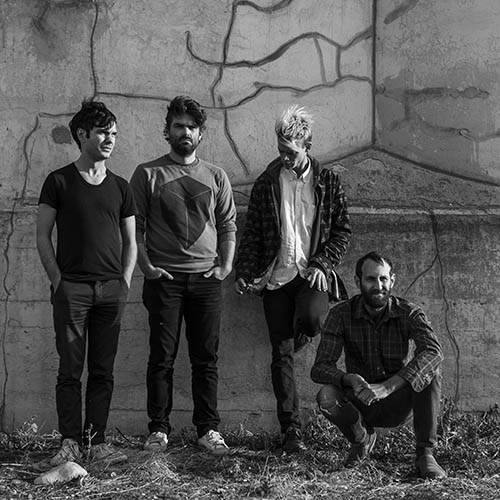

 Don’t listen to Viet Cong when you’re in a good mood. Happiness has no place within this band’s world. There’s plenty of existentialism, darkness, depression and punishment to go around though, if you’re interested. But that’s pretty much what you’ll get from any artists affixed with the genre label of post-punk. Just look at Joy Division, the go-to post-punk reference, who made it their mission to tell everyone that love will tear us apart. Actually Viet Cong and Joy Division share more than just some sonic similarities to one another. Their names both reference controversial armies/regiments from past wars responsible for plenty of death and destruction. That’s even resulted in at least one Viet Cong show being cancelled specifically because of their name. But they continue to soldier on, because what else are they going to do? What really matters in the end is the music itself, and at the very least in that aspect Viet Cong’s self-titled debut album is a real killer.
What makes Viet Cong such a great and worthwhile record can really be whittled down to a single word: passion. It’s a quality that echoes through every single track, as the band plays with such urgency and hunger that you can’t help but be sucked into their vortex. The creative and unique twist they put on the post-punk label is equally exciting, particularly since so many other artists are simply content to do their best modern interpretation of The Jesus & Mary Chain or Sonic Youth. You can hear Viet Cong hit those touchstones with dashes of bands like Guided By Voices (“Continental Shelf”) and Wolf Parade (“Silhouettes”) as well, but then quickly swerve in obtuse and unexpected directions to keep you on your toes. While such experimental shifts can effectively alienate most listeners who thrive on the safe and familiar, the songs do their part to actively engage rather than shut anyone out. It’s how they can turn an 11-minute song called “Death” into one of the heaviest and most white-knuckle rides of 2015 so far.
Actually, calling the entire album a ride is another great way to describe it. Though the lyrics tend to be less than upbeat and the melodies won’t make you recall a bright, sunny day, this is a really fun and darkly humorous (on occasion) collection of songs. In the middle of “March of Progress” for example, vocalist Matt Flegel brings a serious amount of veiled sarcasm and dry wit to lines like, “Your reputation is preceding you/ We’re all sufficiently impressed/ And this incessant march of progress/ Can guarantee our sure success.” It’s a sly eye roll, scoffing at the idea that artists need to go out of their way to kowtow to critics and crowds in order to get ahead. Such matters aren’t of concern to Viet Cong, and their refusal to compromise or adjust their art for the sake of acclaim and popularity seems to have yielded them healthy portions of both.
As breathlessly exhilarating as the seven tracks of Viet Cong can be, it’s also important to note they’re equally fraught with conflict and a severe lack of any real human emotion. Flegel sings in a commanding monotone best compared to Interpol’s Paul Banks, and when combined with the highly distorted guitars as well as Mike Wallace’s overtly mechanical yet punishing drumming, it can register as very cold and clinical in its approach. Of course such a glassy-eyed approach has roots in post-punk and industrial music in the first place, so it makes sense for Viet Cong to fall in line there. They also avoid any hot button topics such as love or politics in their songs, favoring obtuse and wordy metaphors over clarity and relatability. These are the prices paid to thrive on experimentation and unpredictability. The band places form and function above all else, and such tinkering pays off with perhaps the first truly original record this year.
MP3: “Continental Shelf”
MP3: “Silhouettes”


Oh thank goodness Sleater-Kinney are back. It’s been 10 years since they chose to take an “indefinite hiatus,” and a whole lot of wild things have happened in that time frame. To quickly sum up, Corin Tucker started a family, then released two lovely yet quiet records fronting the Corin Tucker Band. Carrie Brownstein became something of a celebrity, grabbing attention for her acting chops in small films and TV shows, most notably Portlandia. She returned to music briefly in 2011 with a new band Wild Flag, which also included S-K drummer Janet Weiss. One album and one tour later, Wild Flag called it quits. Lastly, for her part Weiss has kept very busy playing in a variety of bands, most notably a stint with Pavement’s Stephen Malkmus as one of the Jicks. The reasons behind Sleater-Kinney’s 2005 break-up included Tucker’s decision to focus on raising a family and Brownstein’s serious health issues due to constant touring/recording, all of which seemed to imply a reunion would be unlikely. Yet maybe the time off was enough for the trio to recharge their batteries and begin to miss what they had together. After 10 years on and 10 years off, let’s hope that this new album No Cities to Love also marks the beginning of a new era for the band.
The primary concern with Sleater-Kinney, as with any band that reunites after a significant period away, is whether or not the new music will live up to the old catalog. 2005’s The Woods ultimately reflected a band going out at the top of their game, with everything prior building to that momentous record. A decade later, it’s very comforting to know that they haven’t forgotten how to write a song, nor have they mellowed with age. In some respects it’s like they never left, which is just about all you could ever ask for from Sleater-Kinney. Even John Goodmanson, who produced every one of the band’s previous records except for two, returns to the fold. Yet there are a few notable changes on No Cities to Love that are less apparent on the surface but become more obvious the closer you look. Brownstein has said in interviews that the trio began recording sessions for the album in 2012 with the intention of finding a new approach to the band, and by many measures that appears to be the case. They’ve never sounded cleaner or more focused. Clocking in at just over 30 minutes, the 10 tracks fly by without stopping for breath or even a ballad. The acidic and highly aggressive grit of their last couple records has been replaced with something a bit more accessible and mature, even though it’s by no means quieter or less vicious. Tucker’s vocals still show more power and range than most, Brownstein’s guitar solos remain vibrant and complex, while Weiss’s intricate rhythms keep everything held together quite nicely.
Perhaps the best way to get a sense of Sleater-Kinney’s more mature headspace across No Cities to Love is to take a microscope to their lyrics. These are some of the most personal songs the band has ever written, and that’s clear right from opener “Price Tag”. Acknowledging her status as a mother with a family, Tucker has harsh words about the recent economic recession and the challenges of trying to make a decent living wage when a lot of larger corporations are out to exploit their workers. Abuse of power is one of the primary themes of the record, and the biting “Fangless” along with the charging “No Anthems” address the issue in smart yet explicit ways. It’s also great to hear the trio sing about inter-band workings as well as their decade-long absence across multiple songs. The bouncy and fun “A New Wave” is about making your own path and not allowing the “venomous and thrilling” voices to change or shape you. They’ve got each other’s backs and will continue to do their own thing even if it drives them into obscurity.
Speaking of obscurity, the two main songs that deal with their hiatus show up right at the end of the album. Of the pair, “Hey Darling” is the most confessional, serving as a bit of a letter to fans. It also happens to be the one song on the record that sounds most like classic Sleater-Kinney. “Explanations are thin, but I feel it’s time/ You want to know where I’ve been for such a long time,” Tucker sings in the very first verse. What follows from there goes into how fame isn’t all it’s cracked up to be, and sometimes even playing music for a room full of people can leave you feeling lonely. There’s not much subtext to be interpreted, except the idea that band life can become a bit of a drag if that’s all you do for a decade and sometimes you just need a break. “Fade” really plays that through to its fullest and most realized conclusion. “Oh what a price that we paid / My dearest nightmare, my conscience, the end,” wails Tucker over Brownstein’s heavy 70’s-style guitar riffs. There are dimming spotlights, a loss of a sense of self, and the question of whether or not the torture was ultimately worth it. The mere existence of No Cities to Love implies that the answer is yes. Considering how it all went down the first ten years, it’s probably best to assume things will be handled very differently from here on out. Who knows how long it might last, but as Tucker herself puts it, “If we are truly dancing our swan song, darling/ Shake it like never before.”

 Noah Lennox aka Panda Bear has been making music for a long time. Nine albums and a bunch more EPs with Animal Collective, and counting Panda Bear Meets the Grim Reaper, five solo full lengths as well. That’s a wealth of material, made all the more interesting by how his sonic and lyrical themes have evolved over the last 15 or so years. The one thing he’s never been is complacent, and that’s served him particularly well on landmark records such as 2007’s Person Pitch and 2009’s Animal Collective release Merriweather Post Pavilion. Though each new piece of music stands alone as its own unique statement, we have reached a point where there are certain qualities that define a Panda Bear song. Things like samples, reverb, psychedelia and overdubbed vocal harmonies have become par for the course, it’s just the way they’re presented that has changed.
Following the dark, dub-infested minimalism that was 2011’s Tomboy, it’s something of a relief that Panda Bear Meets the Grim Reaper is a bit more well-rounded, albeit still quite serious affair. Singles like “Mr. Noah” and “Boys Latin” bounce, swirl and ensnare you with their hooks before you have the chance to realize you’ve been sucked in, the words often so obscured with reverb that you’re never fully sure what they’re saying but sing along anyways. That’s part of the charm. Yet when a phrase does come across with clarity, as on the latter track with the line, “Dark cloud has descended again,” it turns a seemingly joyful moment to one of dread. Such is the dichotomy that permeates much of the record, as Lennox embraces the love and serenity that growing older and having a family can bring, while at the same time wrestling with the fear of dying and leaving them all behind. The album title itself spells that out explicitly when the lyrics don’t.
At it’s heart however, Grim Reaper seeks to establish an overall focus on good triumphing over evil and finding the pleasures in life, one day at a time. The two tracks at the center of the record, “Come to Your Senses” and “Tropic of Cancer,” take a break from the frenetic sound collages that dominate much of the album to offer moments of sobering contemplation and outright beauty. On the former, Lennox chants, “Are you mad?” over and over, each time with a slightly different intonation, as if he’s trying to suss out what those three words even mean before finally deciding, “Yeah, I’m mad.” With the latter, harps and pianos plink with a heavenly sort of grace, as Lennox considers life after death and in doing so revives some of the memories of his own departed father from more than a decade ago. It’s a bit of a callback to his 2004 solo debut Young Prayer, which was created as a tribute to him.
Panda Bear Meets the Grim Reaper probably won’t be remembered as the best Panda Bear album, though it is his most accessible and all-encompassing to date. Thanks to its meticulous sequencing and reflective themes, it’s the sort of record that takes you on a journey and leaves you off in a much better place than where you started, even if it took some serious chaos to get there. Chalk up another big win for Mr. Noah.

This is it! The final post of 2014 also marks the conclusion of Listmas and specifically this Top 50 Albums of 2014 countdown. It’s been a long road with plenty of bumps and delays along the way, but we’ve finally reached the peak of this imaginary mountain. At this point I’d like to give a special thank you to everyone who read something, clicked on something or downloaded something here at Faronheit over 2014. All of the content that’s posted here is for you to discover and enjoy, and I’m grateful for anyone who visits with that intention. It hasn’t been the best year for the site content-wise, but the hope is to generate more and return to form in 2015. Typically I’d tease a bunch of new features and exciting things in development for next year, but honestly most of that stuff either gains no traction or simply falls off never to be heard from again, so let’s just stick to the mantra of more everything and go from there.
So what can I say about these Top 10 Albums of 2014? Well, like the other entries in this list, there’s plenty of variety in terms of genre and style. It goes from weird to fun to noisy to sexy to relaxing to adventurous and back again. If you’ve been following me on Instagram these last few weeks, you’ve been given access to an early preview of the eclectic Top 5, though I can assure you that #6-10 are as equally exciting and wonderful. And hey, while I wasn’t able to write a lot of album and show reviews this year, some of the ones I did write about make an appearance here. Also worth mentioning: a particular pair of artists who are members of my Class of 2014 had an exceptionally great year, helping to continue to support that program. So I’m not going to spend any extra time talking this up. Please join me past the jump for the big reveal of my absolute favorite albums of the year.

As we get into the home stretch of this Top 50 Albums of 2014 list, allow me to briefly reflect in a more general fashion about what this year meant for music and the music industry. There seems to be a general consensus among many music writers and critics that 2014 was a bit of an off year. There weren’t a whole lot of genuinely exciting, mindblowing records that came out, so in a sense I understand where that idea comes from. But it also makes me wonder if we’re just a bit spoiled as well, you know? Like we’ve been really lucky these last few years, and suddenly when the magic starts to fade a bit we just go ahead and blame the artists for not bringing their “A” games every time. For what it’s worth, while I think this year has probably been the weakest so far this decade, I didn’t have any trouble filling up my Top 50 Albums list. There’s about 10 albums I wanted to include but couldn’t due to space restrictions, so that seems to indicate to me that things aren’t terrible. Where 2014 truly shined was actually in the songs. Many of the full lengths may not have been up to snuff, but boy were there some spectacular individual tracks this year that completely blew my mind. We’ve been headed towards a “single” culture for awhile now, and while I’ll always favor the long statement album over the 3 minute track, this year made me understand that concept just a little bit better. I’m excited to hear what 2015 will bring us, and if the couple of albums I’ve heard in advance of next year are any indication, it might be a great year all-around. Now then, let’s get into today’s set of 10 in this Top 50 Albums countdown. In case you missed the first three installments, here are links for you: [#50-41] [#40-31] [#30-21]
Join me past the jump for #20-11!

As we reach the halfway point in our countdown, let me say a few quick words about D’Angelo. As you’ve hopefully heard, he released his long-awaited second album Black Messiah a couple of weeks ago, during a time when many in the music world had already released their Top Albums of 2014 lists, or at the very least were on the verge of doing so. The Top 50 Albums list that we’re counting down right now was actually all locked in during the first week of December. Really it’s just the writing that’s holding up everything being published in a more immediate fashion. So like those other music media outlets, I’m officially ruling that Black Messiah missed the unofficial cut off date and will not be found on this list. If you’ll recall, a similar thing happened with Beyonce last year, as her self-titled album came out a couple of weeks before Christmas. That turned out to be one of the best albums of 2013, to the point where I almost felt it’d be reasonable to include it on this year’s list since it missed out last year. Actually that D’Angelo record is one of 2014’s best as well, which also makes its lack of representation here just a touch sad. So I’ll advocate for it right now. Please check it out and pick up a copy. Of course I’ll also recommend that you pick up copies of all the albums on this Top 50 list. In case you missed the previous entries, here once again are links to #50-41 and #40-31. We’re continuing to chug along here, and I’m now pleased to present the next segment, #30-21!

Okay, we’ve made it to Day 2 of this countdown. In case you missed the first set of 10 albums, aka #50-41, you can click here to bring yourself up to speed. The collection of records you’ll find below has a little something for everybody, I’d say. Well okay, maybe not EVERYBODY. But there’s some great synth pop, some punk rock, some electronica, some hip hop, and a little bit of experimental whatnot in there for good measure. If there’s a theme to be pulled from this portion of the countdown, it’s that change is inevitable, and can often turn out for the best. Anyways, let’s just get right into it. Here’s the Top 50 Albums of 2014: #40-31!
